Let’s talk AI: KInIT at European Researchers’ Night 2026
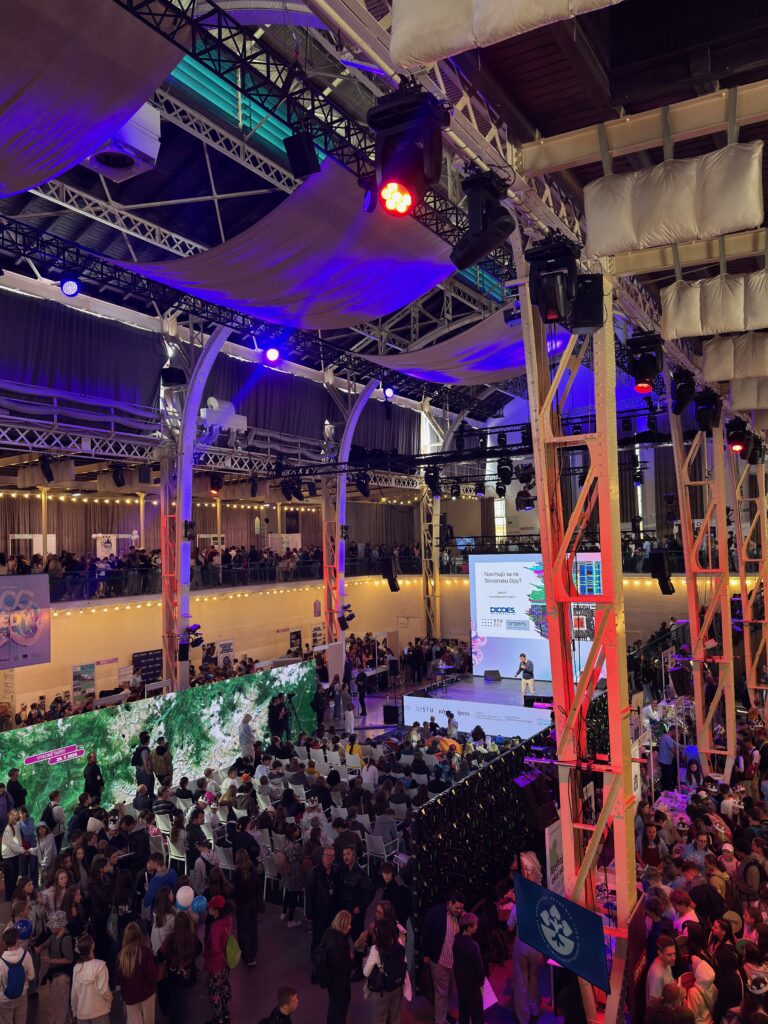
You don’t have to be an AI expert to have a question about it. Perhaps a chatbot once gave you an answer that sounded totally convincing but turned out to be wrong. Or you’ve wondered why the same kind of content keeps appearing in your feed. At European Researchers’ Night on September 25th, KInIT invited visitors to explore these everyday experiences with them and to understand the research behind them.
They were happy to return to the festival in Bratislava, this year as the expert lead of the Information, AI and Freedom of Choice zone. Their research explores how AI shapes the information we see and the choices we make, and the event gave everyone a chance to discuss these topics with a wider audience.
Exploring AI together
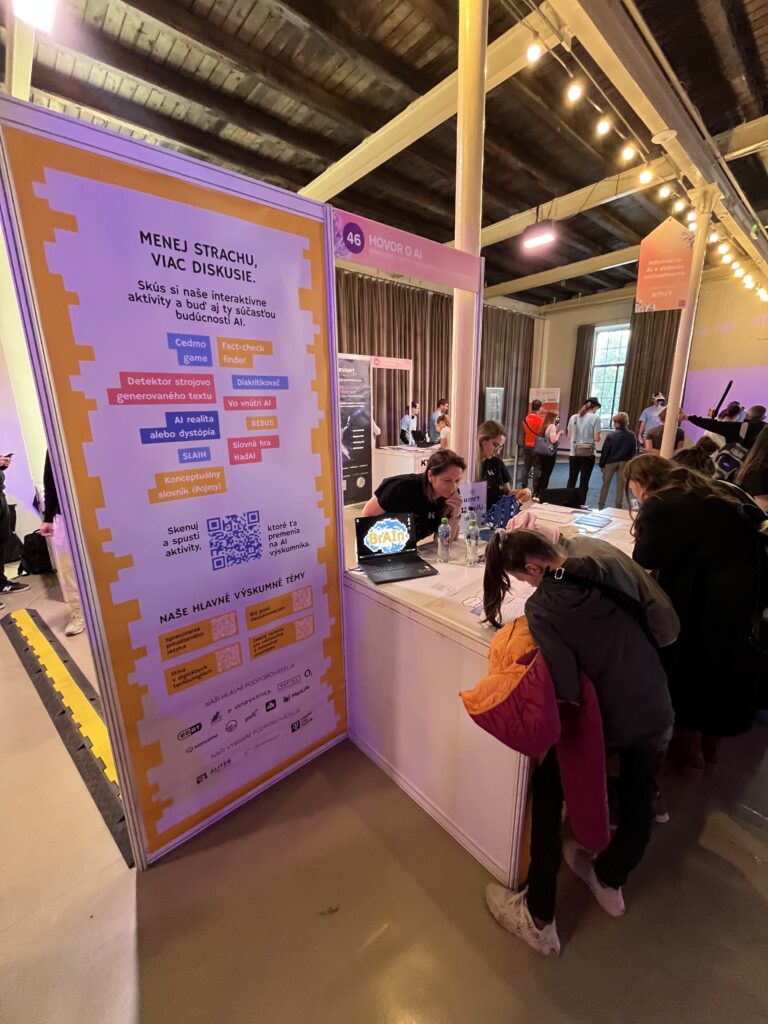
They named the main stand Let’s talk AI because that’s exactly what they enjoy doing: talking to people about AI and their research! Their interactive activity encouraged visitors to think more deeply about different aspects of AI. Together, they explored the topics they were most curious about.
At the (Dis)information and Social Media Algorithms stand, the CEDMO game gave visitors a pretty unusual task. They had to feed an AI system false information on purpose and watch how it responded. Then they switched sides so they could look at the problem from the investigator’s point of view, learning how our researchers study recommendation systems and trying ways to fact-check information available online. Younger visitors could practise spotting advertisements and misleading content, too.
Some activities put the decisions in visitors’ hands. At their Responsible and Trustworthy AI stand, they considered examples of AI used in places like schools and courts and guessed which systems already exist and which ones were made up. In another challenge, they became European lawmakers and sorted AI systems into a risk pyramid. To decide where each one belonged, they had to think about the people it could affect.
Children could explore the topic through drawing. They designed a robot for a specific job and asked themselves whether it really needs to look like a human. And if you were in the mood for a good debate, Change My Mind was the place to challenge arguments about AI ethics. Basically, there were lots of ways to join in.
KInIT researchers on stage
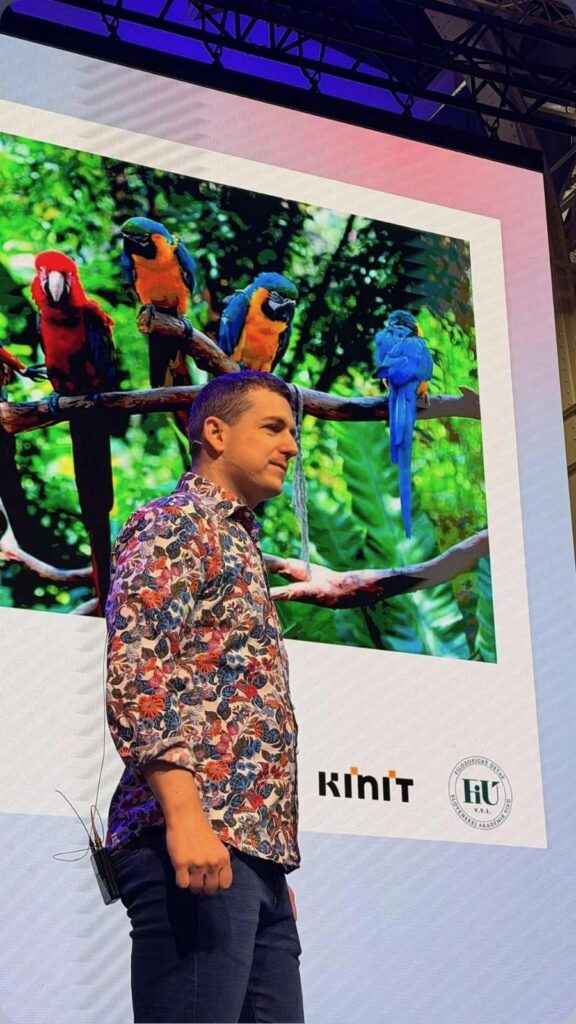
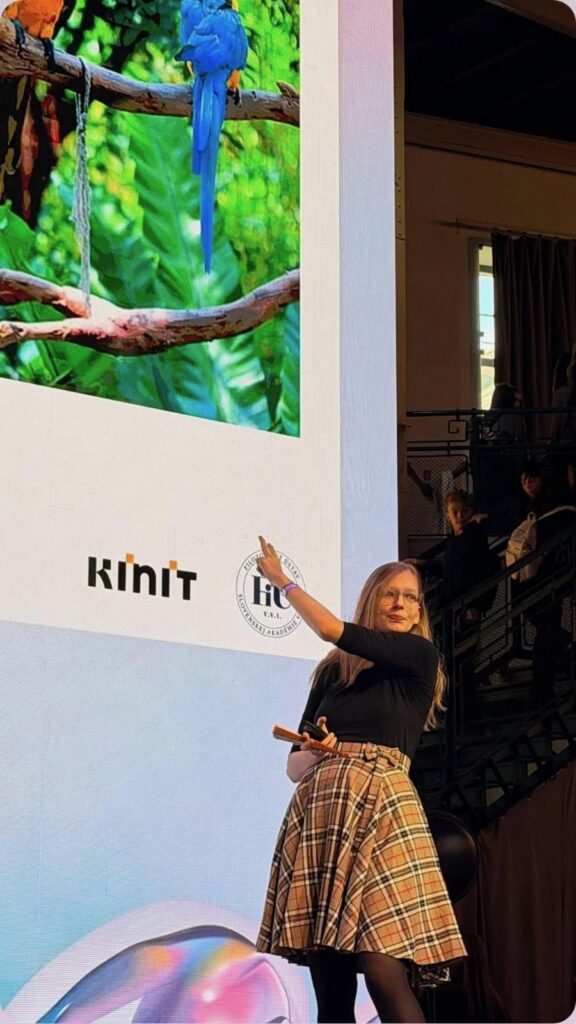
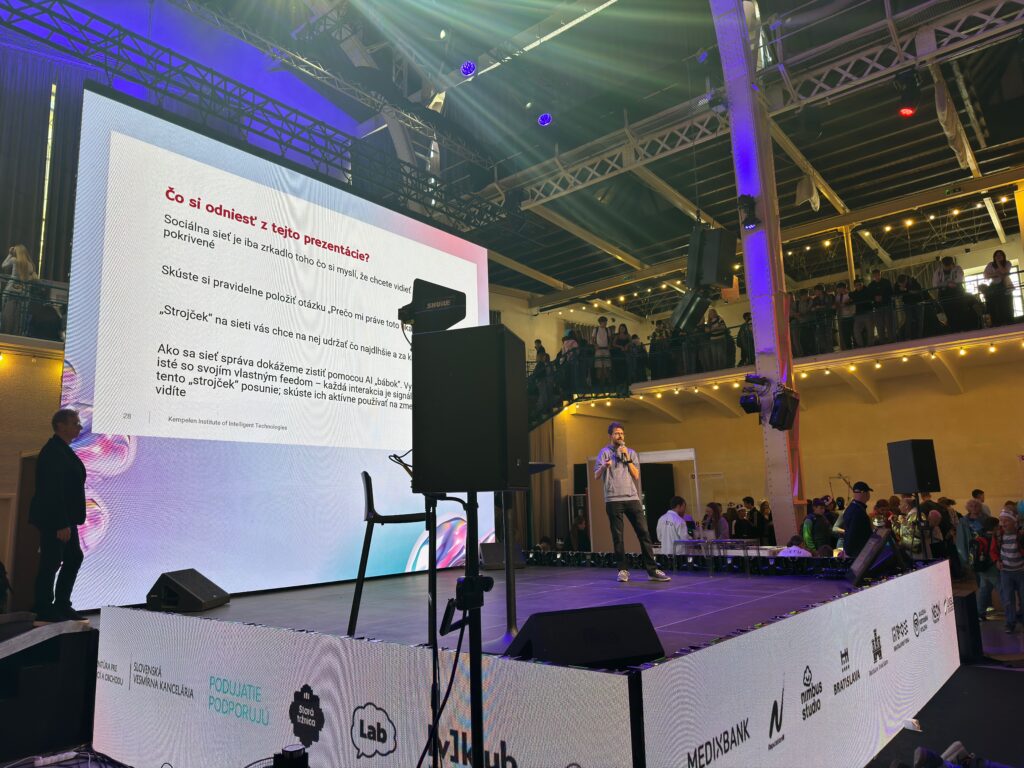
Beyond their stands, KInIT colleagues also took these subjects to the stages at Stará tržnica and V-klub. In What Is Good and Bad About AI?, their researchers Juraj Podroužek and Daniela Vacek talked about why a conversation with a chatbot can feel so personal, and what happens when we start trusting it as if we’d trust another person.
After all, it feels nice when an answer agrees with us. The trouble starts when that agreement supports something wrong or even harmful. Juraj and Daniela discussed this tendency, called sycophancy, and about why a comforting reply still deserves a careful look.
Their advice was pretty down to earth. Double-check the information AI gives you and think twice about the personal details you share with it. And step away from the screen sometimes to spend time with people you trust.
Meanwhile at V-klub, Katarína Marcinčinová joined a discussion for secondary school students about how AI fits into learning and everyday life. Alongside its possibilities for creativity, the session considered what happens to our critical thinking and relationships when we begin to rely on it too much.
Next, KInIT researcher Branislav Pecher’s TikTok, Instagram and the Battle for Your Attention was about something we all know well, which is scrolling through a feed. How long we watch a video and which posts we skip both shape what shows up next on our screens. Over time, this can narrow the viewpoints we see or push us towards misleading content. Something can grab our attention without giving us a reliable picture of the world.
With that in mind, Branislav also explained how KInIT researchers investigate this. Automated agents simulate how people use social media and record the recommendations they receive. AI is used twice here, first to recommend the content and then to help researchers analyse those recommendations.
Their researcher Gabriela Grmanová also took the stage at the Old Market Hall. In her presentation titled Energy on Four Wheels, she challenged the audience to imagine that an electric car can be useful even when it’s parked. She introduced Vehicle-to-X technology, which allows vehicles to supply energy back to homes or the electricity grid, and presented the V4Grid project. Her talk showed how electric vehicles could help us make better use of renewable energy. Electric vehicles could help us use renewable energy more wisely, and the car parked outside your house might one day help power what’s happening inside it.
The question of what to trust returned in the evening discussion with KInIT researcher Róbert Móro. We have access to enormous amounts of data, and yet scientific evidence can still struggle to compete with impressions and emotions. The panel considered why more information does not always leave us feeling more certain about the world around us.
Thank you for stopping by
One of the best things for KInIT about European Researchers’ Night is the chance to talk about their work with the public. As they try out activities together, they also learn from the questions and perspectives visitors share. They hope these conversations have made the technologies that are already part of our everyday lives a little easier to understand.
The atmosphere around the KInIT stands was really lovely, and they were so happy to see how many people stopped by. Thank you to everyone who spent part of their day with KInIT, and to their colleagues who made it all happen.
The event was supported by their civic association BrAIn.
KInIT at AI Build Week
There is no shortage of information about AI today. The field is evolving quickly, and there is always something new to learn. But some things cannot be learned from articles or tutorials alone. They only start to make sense once you begin building and learning alongside people with real experience.
At KInIT, they believe that sharing knowledge is just as important as creating it. Supporting people who are curious and eager to learn has always been an important part of what they do. That is one of the reasons why they became a partner of the event called AI Build Week.
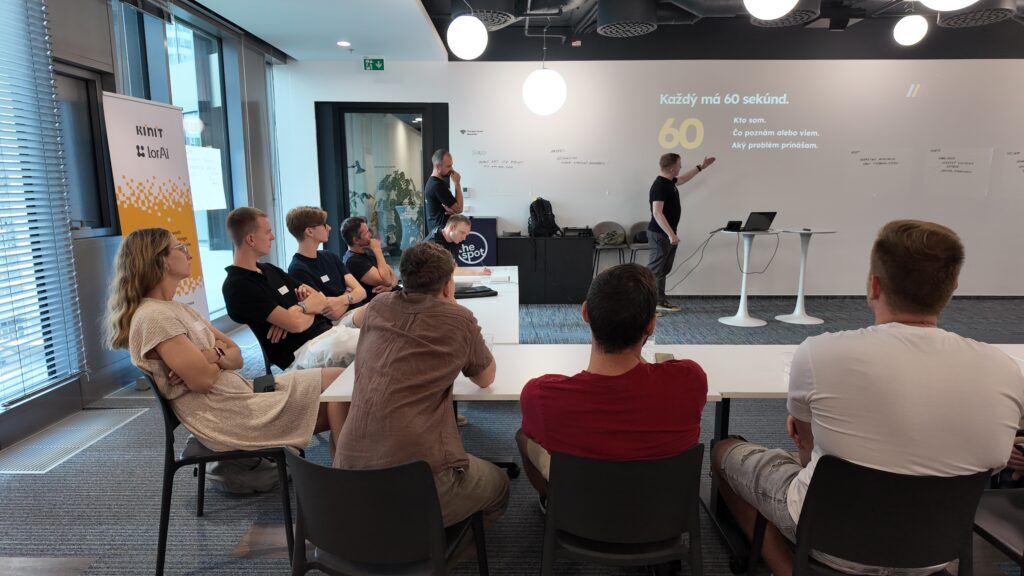
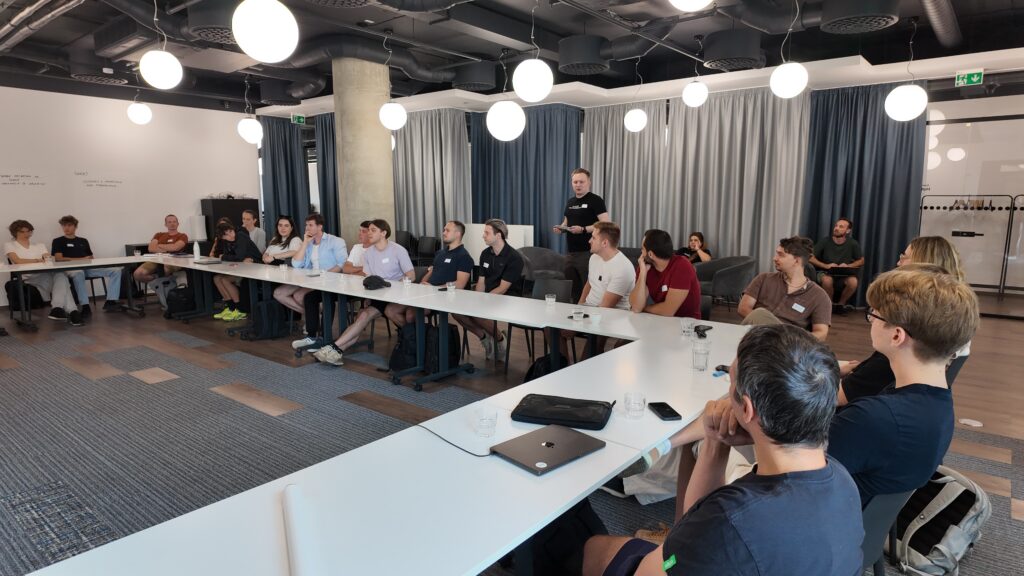
The five-day programme brought together students and young professionals who wanted to turn an idea into an AI-native product. Rather than spending most of the week in lectures, they spent it building. They worked in small teams, developing their projects with guidance from experts by their side throughout the week. For KInIT, that felt like a natural fit.
The event ran from July 27th to 31st at The Spot in Bratislava.
From KInIT Mentors
Two members of the KInIT team joined the programme as mentors, each bringing a different perspective to the teams they worked with.
KInIT Innovation Manager, Martin Veselý, worked with participants on the business side of their projects.
“In the age of AI, building has never been easier or more accessible. Events like this help young innovators focus on what still matters most: identifying meaningful problems people actually care about, working with like-minded people, and improving ideas through real feedback from experienced mentors and real users.”
Peter Zigo, one of KInIT Research Engineers, focused on the technical side.
“After just a couple of hours, even people without a technical background were able to work with a coding agent, commit code, and guide it in bringing their ideas to life.”
The pace of that shift was something he noticed throughout the week.
“Fascinating to watch domain experts shape their vision directly without intermediaries or unnecessary friction.”
They weren’t the only mentors there. Marek Šuppa (Slido), Peter Kolesár (Traun Ventures), and Peter Hraška (Slido) guided teams too, and with that range of backgrounds in the room, most teams found someone who had already solved their exact problem.
Supporting Curious People
By Friday, teams had turned ideas into working prototypes with mentors supporting them throughout the process.
What stayed with KInIT most was curiosity. Participants were eager to learn, and they were guided by experienced professionals every step of the way.
That is what AI Build Week is really about, and it is why KInIT wanted to be part of it. Five days is not a lot of time, but it is enough to watch curiosity bloom into ideas that are worth creating and sharing. That is why they believe in creating spaces where people can learn from each other and bring those ideas to life.
Three Days of NLP Summer School at KInIT
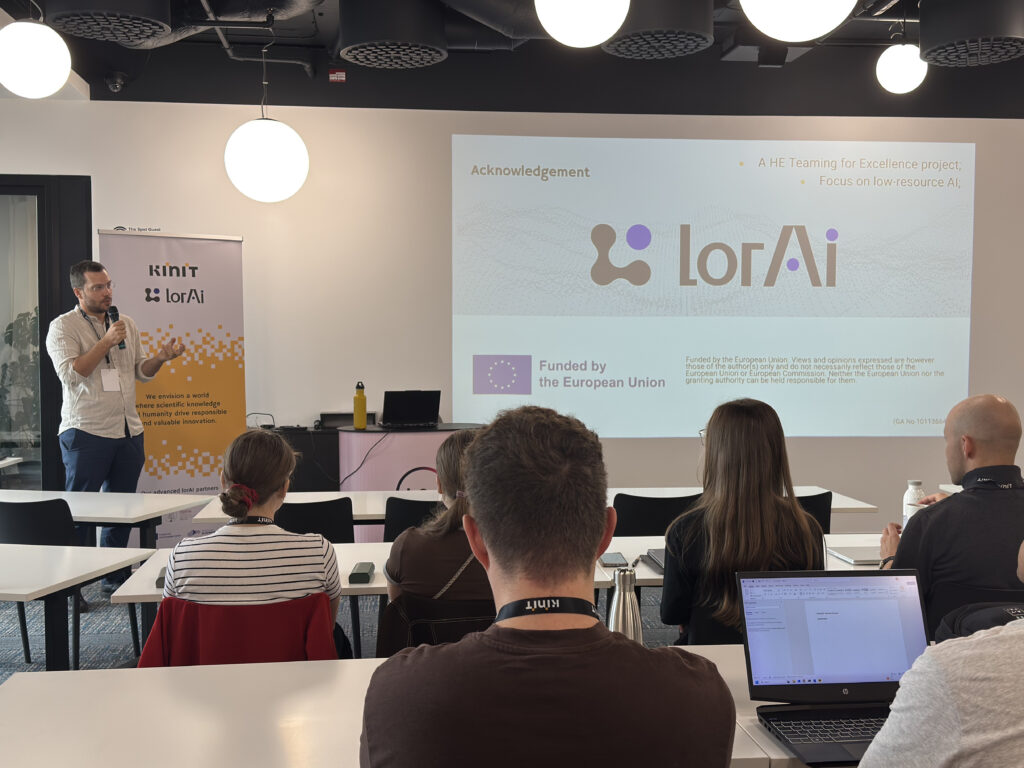
At the beginning of September, KInIT offices at The Spot welcomed students and other participants who wanted to learn more about natural language processing. Some already had experience with AI, while others were only beginning to explore the field. That meant the questions in the room ranged from the basics to the details of current research.
The KInIT NLP Summer School took place from 2 to 4 September. Over three days, participants learned directly from experts from KInIT and partner institutions. There was also plenty of time to ask questions and continue conversations during the breaks.
Starting with the foundations
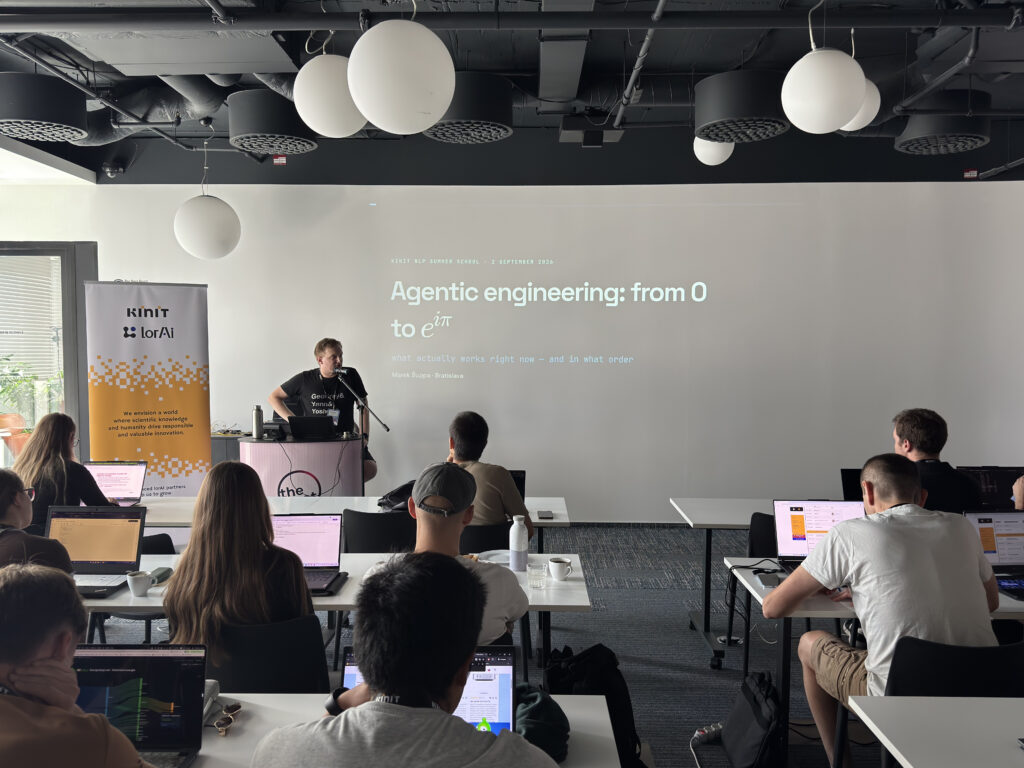
The first day gave everyone a common starting point. Jaroslav Kopčan opened with Introduction to large language models, and Marcel Veselý followed with Agentic AI. Marek Šuppa showed how he uses these tools in practice during Agentic engineering: from 0 to eiπ. Andrej Ridzik ended the day with Evaluating LLMs, a session about how language models are assessed and where benchmarks fall short.
The practical examples stood out in the feedback. Marek’s session quickly became one of the favourites, while the demonstrations helped participants understand how AI agents really work. Some people wanted to explore the technical side in more detail, while others would have appreciated a little more time to take everything in.
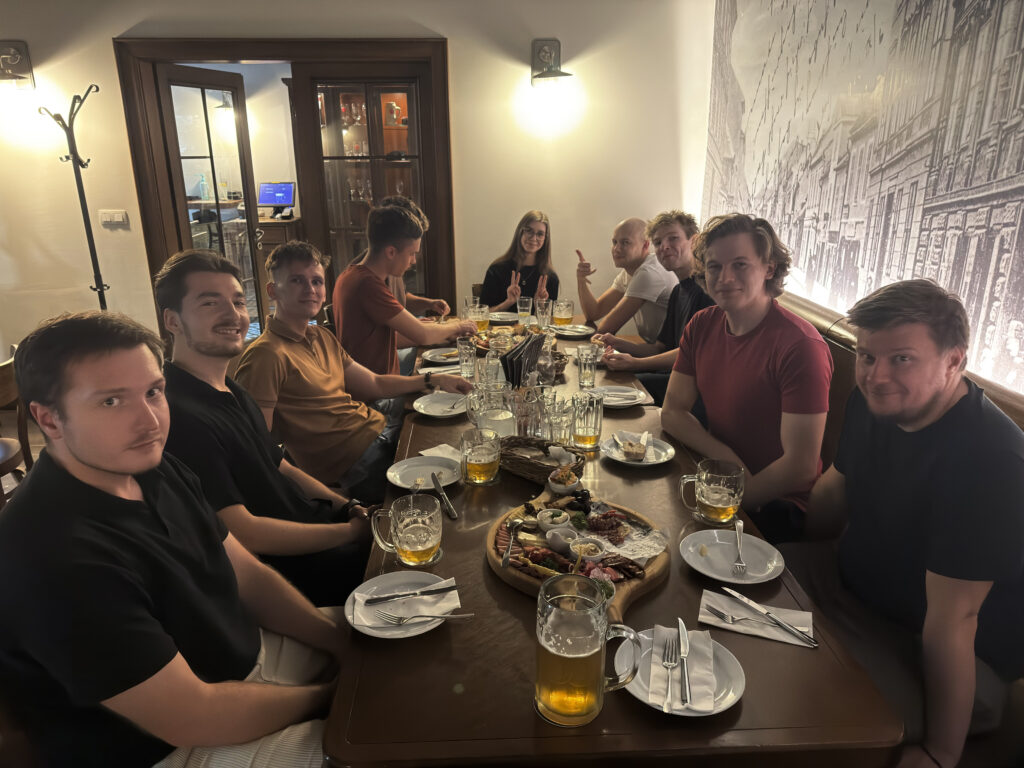
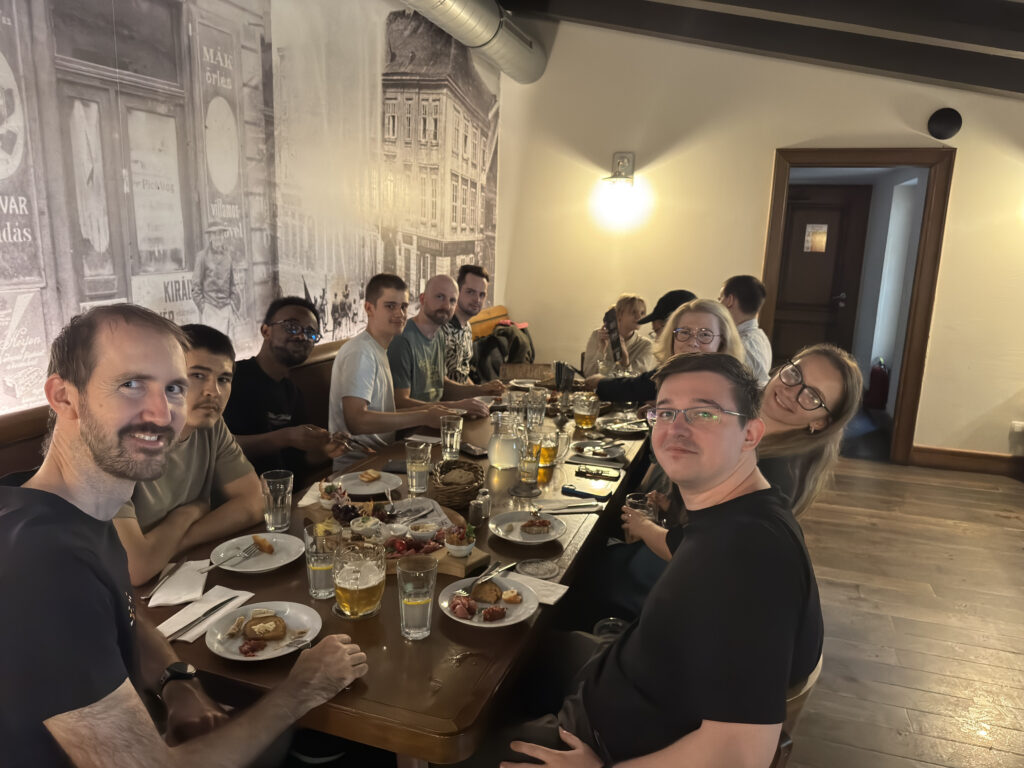
After a full day of lectures, they met for a shared dinner. It gave everyone a chance to finish the conversations that had started during the programme. Several participants later mentioned how much they enjoyed talking with the speakers and getting to know the other attendees in a more relaxed setting.
Looking beyond text
The second day showed that natural language processing is about much more than text. Viktor Gregor opened with Understanding audio and speech with language models. Using practical examples, he showed what the technology can already do and where it still struggles. His session became one of the best-rated talks of the summer school.
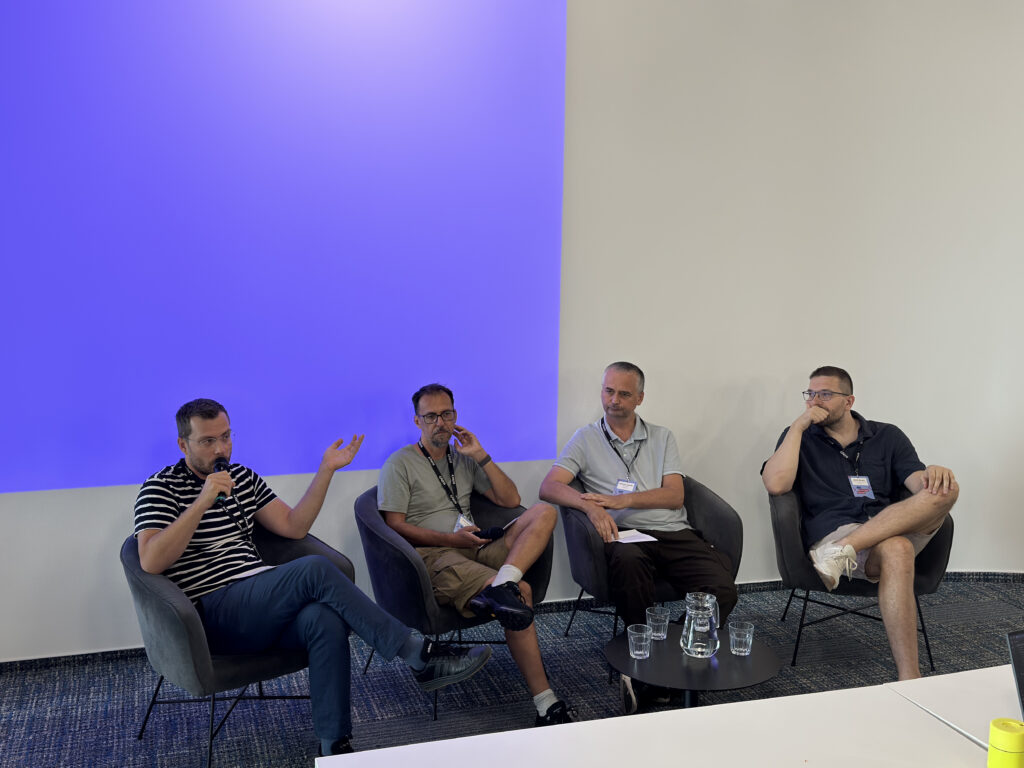
The panel Whose model speaks your language? brought together Marián Šimko, Radovan Garabík, Peter Bednár and Matúš Pikuliak. Participants enjoyed hearing different views on language technologies, but they also appreciated that the speakers did not agree on everything. A few people even wished the discussion had lasted longer.
Ivana Beňová then introduced Vision-language models. Michal Gregor and Kamil Burda took participants inside neural networks during Mechanistic interpretability, while Ivan Vykopal closed the day with Fine-tuning LLMs (SFT, RLVR, LoRA).
Some of these sessions were technically demanding, and the feedback reflected that. Participants were interested in the topics but would have welcomed more time and guidance during the practical parts. These comments gave KInIT useful ideas for the next edition.
Research up close
The final day brought the research process closer to participants. Michal Gregor opened with Beyond scaling: the future ingredients of intelligence. Branislav Pecher followed with (Lack of?) Robustness of large language models and shared his experience of doing a PhD. His personal perspective was especially valuable for participants who are considering a research career themselves.
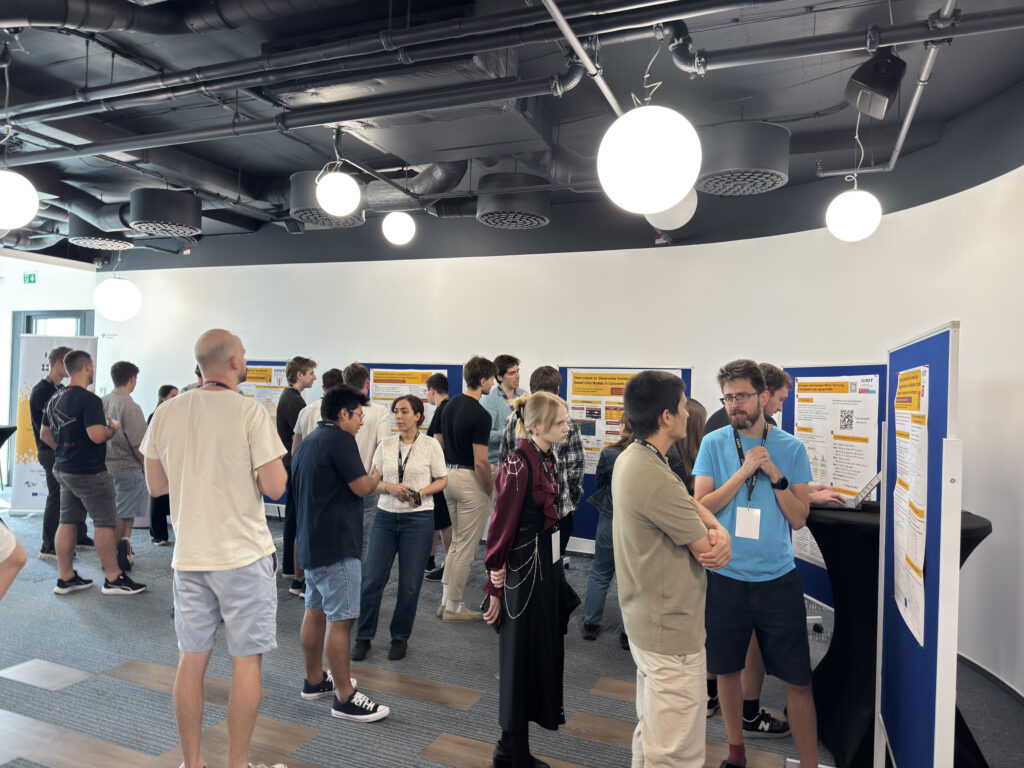
The Poster session became one of the highlights of the whole summer school. Participants could talk directly with KInIT PhD students and interns, learn about their projects and ask questions at their own pace. Many appreciated seeing what research at KInIT looks like up close.
We ended the summer school with the ethics panel AI as a reflection of our minds? Anthropomorphism and ethics of human-AI interaction. Adrián Gavorník moderated the discussion with Katarína Marcinčinová, Michal Gregor, Igor Farkaš and Nora Hargaš.
The conversation turned to anthropomorphism and the way people relate to AI. The panellists brought different perspectives and openly disagreed on some questions. Participants enjoyed that openness, and several said the discussion could have continued much longer.
Looking back at three days together
The lectures, panels and poster session received an average rating of 8.7 out of 10. In their comments, participants often mentioned the practical examples and the opportunity to speak directly with researchers. The friendly atmosphere also came up again and again.
They also told KInIT what they could improve. More guided exercises would make the most technical topics easier to follow, and some sessions could use a little more breathing room. They are grateful for the honest feedback and will keep it in mind when planning the next edition.
KInIT is thankful to everyone who joined them and to the partners who helped make the summer school possible. Many participants said they would be happy to come again, and KInIT would be happy to welcome them back.
“This year was special. The programme was a lot more varied than in the previous iterations, with the two panels and a poster session. There was also a lot of new, interesting content, including sessions on agentic AI and on speech. But most importantly, we had a great group of participants again this year – it was a lot of fun and when everybody left on Friday, I realized that I was going to miss them!”
Michal Gregor, Researcher at KInIT
Another year of lorAI, six years of KInIT
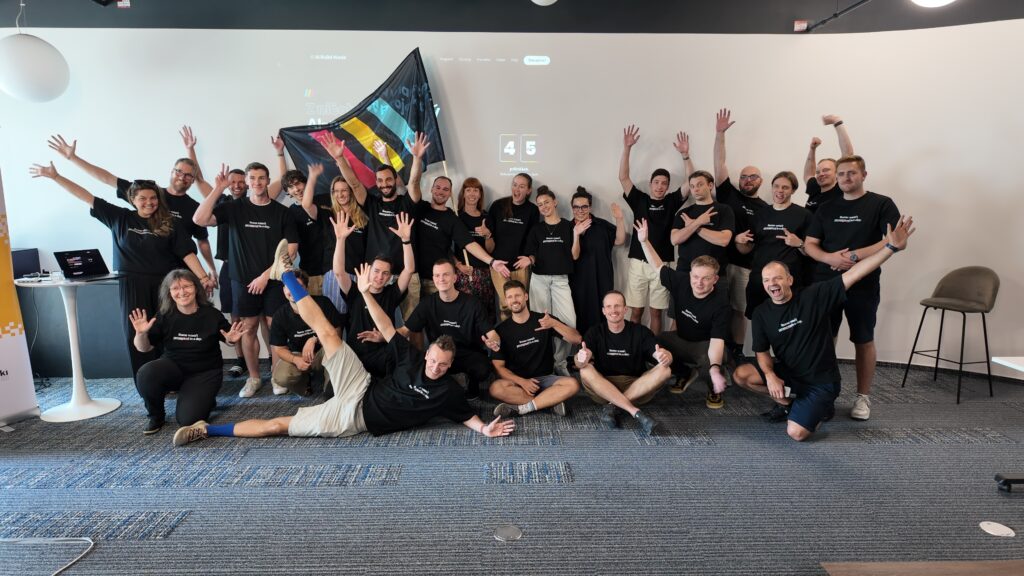
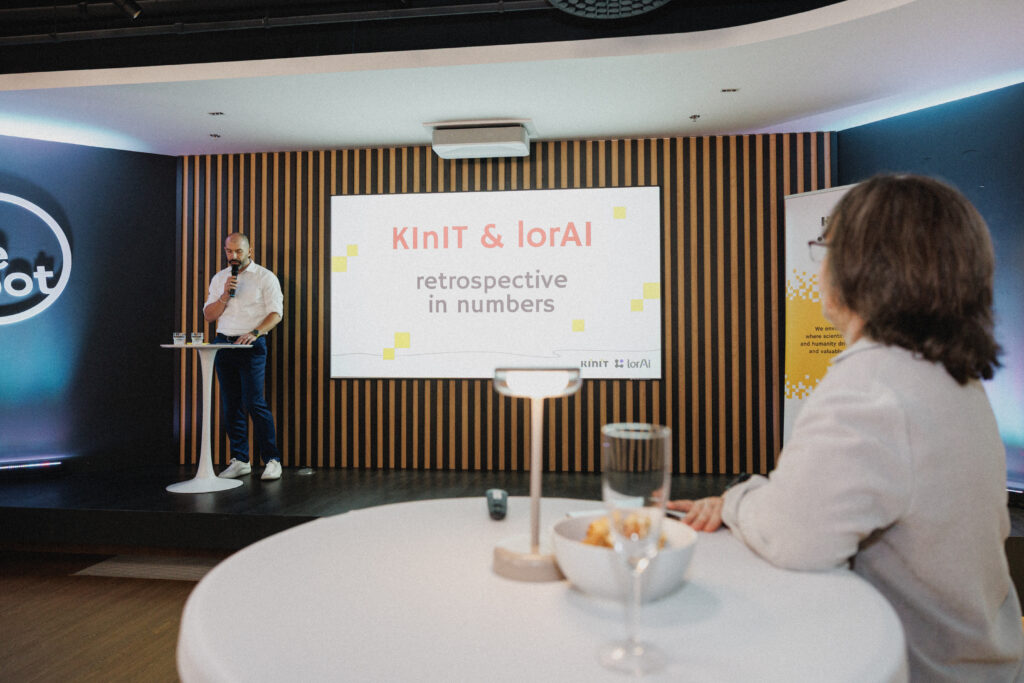
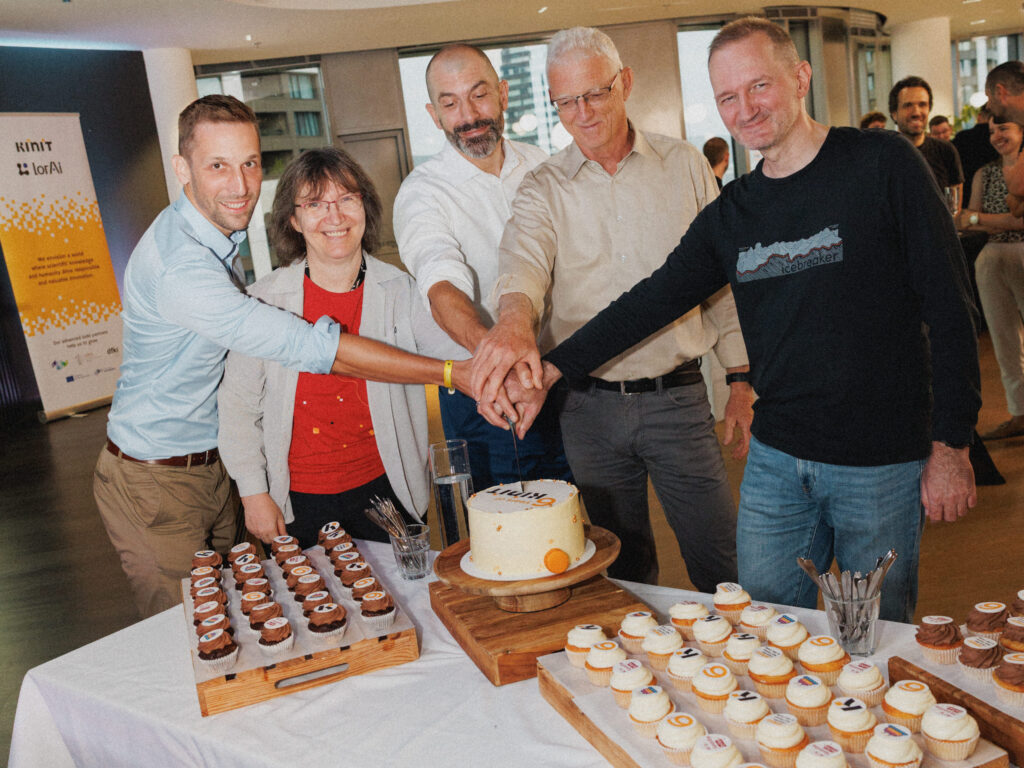
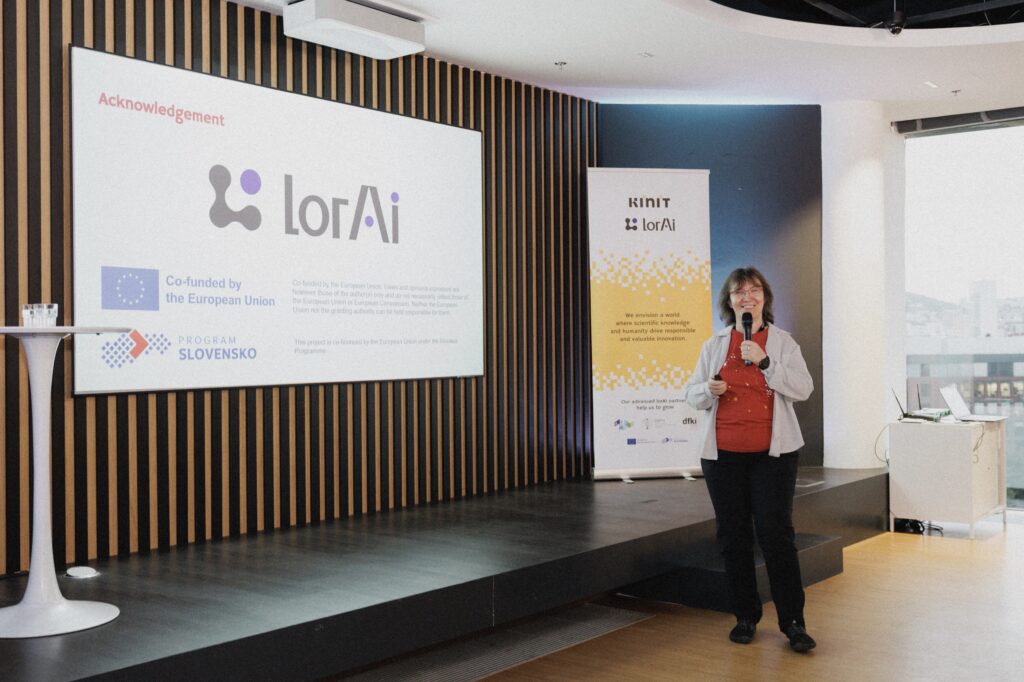
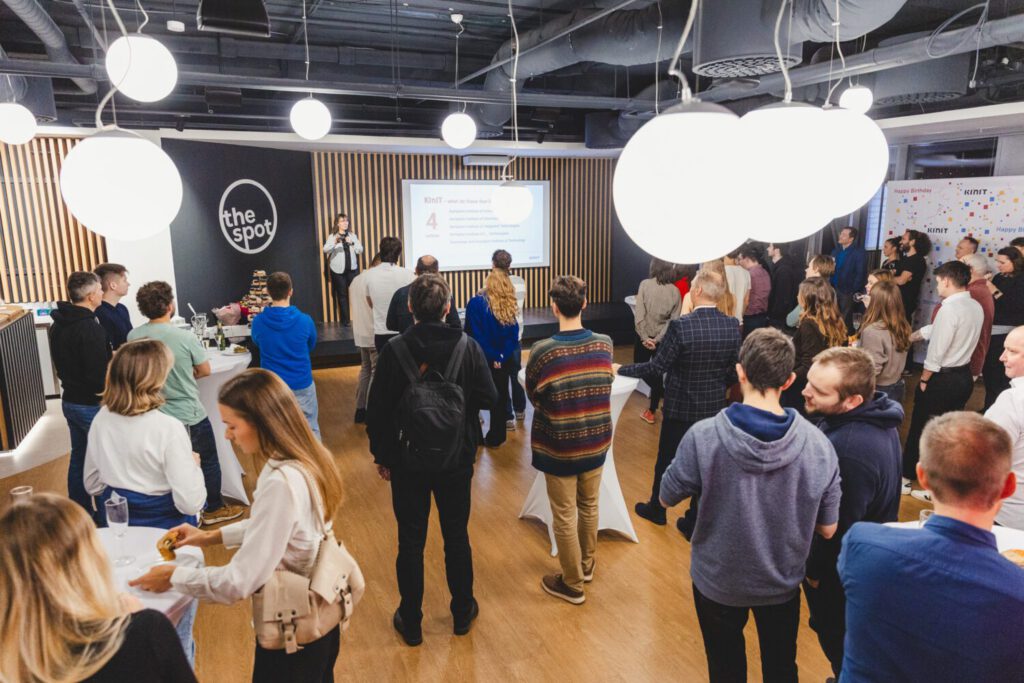
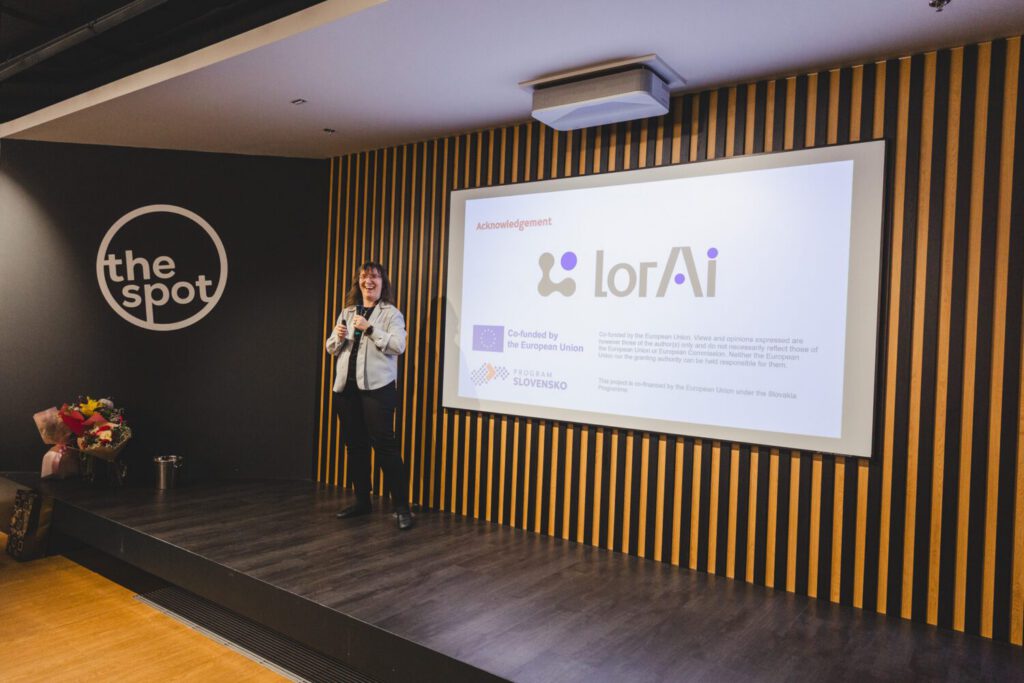
Most days, we focus on what comes next. Recently, KInIT came together again to reflect on its six years journey.This gathering gave everyone a chance to pause and see how far they have come. They also looked back on another year of lorAI and the progress made along the way.
When KInIT was founded in 2020, it brought together 24 professionals who believed that world-class, independent AI research could have a strong home in Slovakia. Today, more than 110 team members are part of the institute.
That change reflects six years of everyday work of people who have created what KInIT is today. This event was a special opportunity to step out of the daily rhythm and see the bigger picture.
As CEO Mária Bieliková put it:
“After six years, I can say with pride and confidence that KInIT is now a brand with an excellent reputation, great research and top talent.”
Six years in perspective
The team is not the only thing to have changed. KInIT has secured more than €33 million in funding through national and international research projects. KInIT would not be where it is today without the support of partners who believe in its mission and help to create a place for independent AI research in Slovakia.
Over the same period, KInIT researchers have published 131 scientific papers. Of these, 51% appeared at top-ranked international conferences or in leading journals. Each paper represents months or even years of work that often happens far from public view.
Building KInIT also means opening the door for people at the beginning of their careers. Through the civic association BrAIn, donations have helped create opportunities for students and early-career professionals at KInIT. Since 2024, 40 people have received this support.
Alongside the research, a wider community has formed around KInIT. Over the past year, they have taken their work to conferences and events in Slovakia and abroad. These meetings gave them space to share what they are working on and learn from others.
lorAI and the future of KInIT
One of the most important projects that KInIT was part of is lorAI. The Horizon Europe project is helping the institute to become a European Centre of Excellence in Low Resource AI.
Low Resource AI focuses on building reliable and efficient AI systems even when data, labels or computing power are limited. This matters especially for smaller countries and for languages such as Slovak, which are often overlooked by mainstream technologies.
Just as importantly, lorAI helps to create an environment where talent can develop and where research can have a stronger impact in practice. This year’s gathering reminded everyone that such a transformation does not happen in one big leap. It takes shape gradually as each year builds on the one before it.
Numbers make the progress easier to see, but they are only part of the story. Behind them are people who have made each step possible.
Today, the idea that brought them together in 2020 is no longer only a vision. With lorAI, KInIT is building on what has already been achieved and creating more space for excellent AI research to thrive in Slovakia and connect with the world.
KInIT and lorAI yearly retrospective
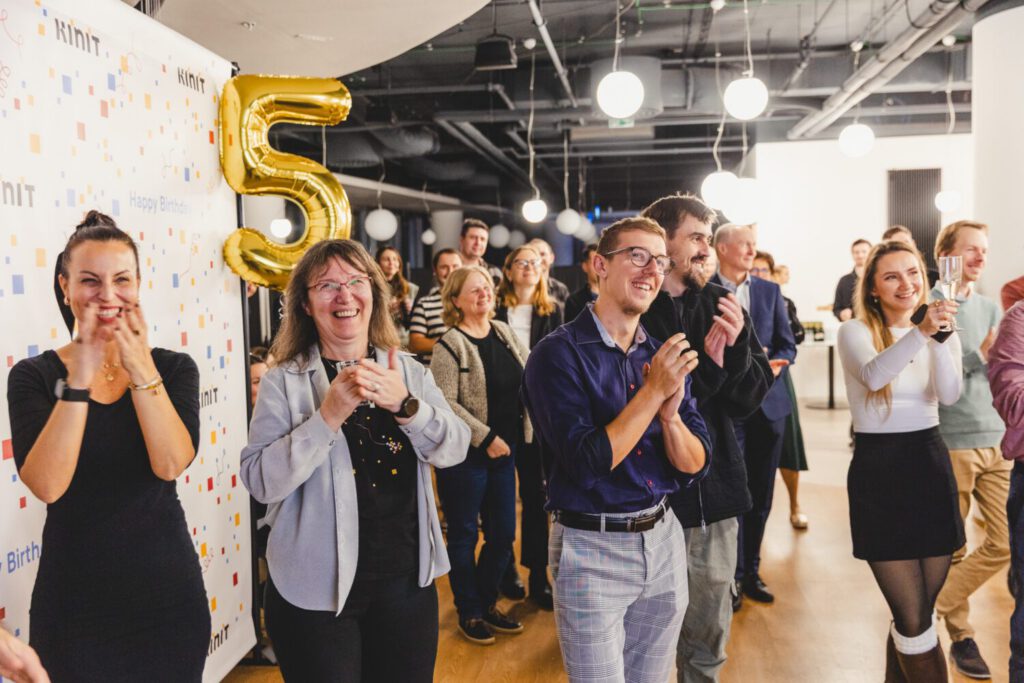
Every story has its stages. Enthusiastic beginnings, moments of uncertainty, but also moments when we can say that it was all worth it. At KInIT, we have reached exactly such a stage. Together with our partners, we met to look back on five years of our shared journey. It wasn’t just another event on the calendar, but a moment when people who believe in research, cooperation, and the fact that impactful projects can be created even in Slovakia came together.
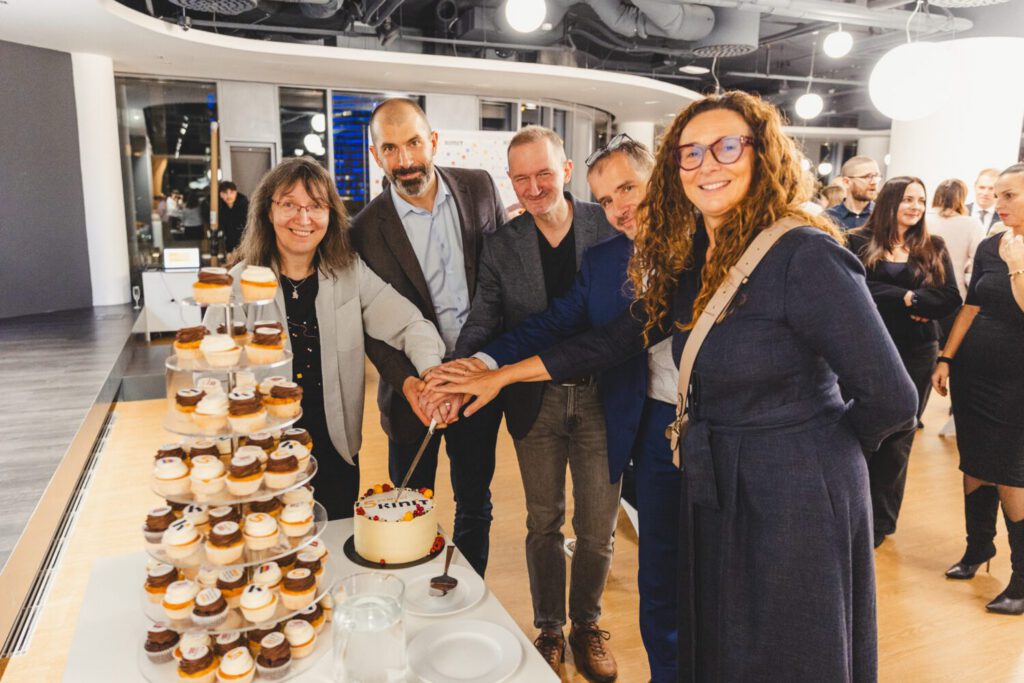
When KInIT was founded on September 9, 2020, all we had was a vision and a lot of determination. We wanted to create a place that would connect academics with companies and the state in the field of artificial intelligence based on excellent science. A place that would connect talent from all sectors and different fields so we could jointly develop innovations that would make Slovakia even better and more competitive. Today, we see that our vision is becoming a reality. From a small group of enthusiasts, we have grown into a stable partner for scientists, innovators, and companies. We are a community that grows, learns, and pushes the boundaries of knowledge further.
At this year’s meeting, we gathered with KInIT colleagues and partners to look back and remind ourselves how far we have come. We also evaluated the first steps in the lorAI project, whose goal is to transform KInIT from a growing research institution into a sustainable centre of excellence with significant social and economic impact and a long-term financial model. The atmosphere was filled with energy that keeps pushing us forward and at the same time reminds us what fullfils us in all of this.
“Our effort is to develop talents, connect the academic, private and public sectors, and show that artificial intelligence is changing the world together with KInIT.” Mária Bieliková, Director General, KInIT.
KInIT 5 years
Over five years, we have come an incredibly long way. From a small group of researchers who believed that top-level research could be done at home in Slovakia, we have grown into a respected institute with international projects and dozens of partners.
What have we achieved?
What we accomplished speaks for itself:
Over 5 years, we have grown almost fourfold – at the beginning there were 28 of us, now there are more than 120 of us, of which more than 90 are researchers and engineers, including interns and PhD students
In the beginning, we were financed by the private sector, and today two thirds of our revenue come from grants and applying knowledge in practice – in 2020, 100% of KInIT’s funding came from the private sector, from companies whose leaders saw an opportunity for Slovakia’s future. Today, KInIT has two thirds of its revenue from grants and collaborations with the business sector, actively supporting technology transfer throughout the ecosystem
Recognition at the European and global level – combining talent, culture, and a supportive space for collaboration produces results accepted at top global forums and participation in consortia with internationally recognized institutions. Today, KInIT works with 130 partners across 30 countries
KInIT is a place for talents – KInIT attracts talent today, from interns and PhD students to researchers and engineers, as well as grant management, HR, marketing, or tech transfer
Research topics with strong societal and economic potential for Slovakia – we connect sectors and fields in AI topics we consider key for a better life – quality of information in the era of social media and large language models, AI ethics and regulation, and predictive modeling for environmental challenges
Behind every number is courage and collaboration, and these are the values that push us forward. This would also not be possible without our partners who were there at the founding of KInIT – ESET, Tatra banka, Innovatrics, Seesame, Softec, and others who have supported us and continue to support us throughout this entire time.
Gamechangers
Without the people who put a part of themselves into this idea, KInIT would not be what it is today. In the Gamechangers series, we returned to those who were there at the beginning and talked about how it was created, how it has evolved, and where it is headed. You can read more in the Gamechangers blog.
lorAI
Every retrospective also brings a look into the future. For us, it has a name: lorAI, a project that opens a new chapter of our story and moves us closer to our goal of becoming a European center of excellence in artificial intelligence research.
lorAI addresses one of today’s major challenges: how to create reliable and efficient AI systems even where data, labels, or computing power are lacking. This topic is particularly important for smaller countries and languages, such as Slovak.
The project is built on three main pillars: research development, talent support and attraction, and the development of innovations and technology transfer. We believe the impact will be much broader. It will support the connection of different sectors and fields, strengthen international collaborations, and create space for young researchers who want to contribute to the development of responsible and sustainable AI.
For us, this means new challenges leading toward fulfilling our vision. Sustainability is key. Finding a model that allows our ecosystem to accept institutes like KInIT and multiply them.
Conclusion
KInIT is built above all by people, those who believe in the purpose of science and the power of collaboration, and in the idea that even in a small country, world-class work can be done. Five years are behind us, but even more challenges lie ahead: to continue and keep pushing the boundaries.
With the lorAI project, we are entering a demanding transformation. We want to seek and support talents, develop research, connect science with practice, and show that Slovakia has its place in Europe and in the world.
Our partners
Richard Marko
Chief Executive Officer at ESET
On the occasion of the 5th anniversary of KInIT’s founding, I would like to thank, on behalf of ESET, everyone who stands behind its success. As co-founders of this independent research institute, we appreciate that KInIT has been connecting academia with practice for five years and proving that excellent science is the foundation of real progress.
We believe that supporting research, education, and excellence in science is the key to building an innovative future of secure and intelligent technologies – and also a way to help keep talent at home in Slovakia.
Thank you for being part of this vision.
Palo Luka
Chief Operating Officer at ESET
1. How do you remember the beginnings of KInIT? What convinced you to say: “Yes, we want to support KInIT?”
It was a little over five years ago when Majka came to us with this idea while thinking about what to do next. She came with the idea of establishing the first private institute of its kind in Slovakia, and we liked the idea from the beginning.
Later, she presented this idea to our board of directors and the owner of the company. They were also interested, and after one presentation and discussion, they decided to go for it and give the project support. We were probably the biggest supporters, but if we had been alone, maybe it would not have gone so quickly and easily.
Gradually, more supporters joined, and the institute was created relatively quickly, as often happens with good projects. From the beginning, I believed it would be a successful project, so I had no doubts. But I have to say that the way it took off pleasantly surprised me. I thought that the early stages, building size and acquiring projects would be slower, and I am pleasantly surprised by how dynamically everything works.
2. How do you perceive KInIT now, how has it changed over the 5 years?
The changes were visible gradually, year after year. It’s not as if after five years we suddenly saw huge differences from the beginning. Every year, we saw positive development and growth.
What makes me happiest is the success in securing European projects and funding. At the beginning, when Majka talked about similar institutes abroad, the funding was usually divided into thirds. I liked that idea, but thought it would not be easy. Now, after five years, it turns out that less than half of the funding comes from private donors, about one third, so we have come close to that.
Of course, the structure is not exactly as originally planned, but I think it’s not far from it. I consider this a huge success from which many institutions could take inspiration and see as a model.
3. What is your wish or recommendation for KInIT and the whole team?
When I talk to journalists about ESET and our global success, I often say that I would be very happy if there were more companies like ESET. We try to support the whole ecosystem so that we are not alone and that there are more companies that achieve international success.
If I apply this to the environment of research institutes, I would wish for there to be more institutes like KInIT, each in its own field. To have more strong teams capable of achieving exceptional results and bringing added value to society.
Martin Kubík
Chief Information Officer at Tatra banka
1. How do you remember the beginnings of KInIT? What convinced you to say: “Yes, we want to support KInIT?”
The beginnings were, I would say, more “firefighter-like”. It was a group of people who didn’t quite know what they were getting into, but they went into it with enormous dedication. Thanks to our CEO, we didn’t hesitate for long. When Majka came to us with the idea of KInIT, we immediately felt it was one of those innovative and positive projects we should support. And so we called her within 24 hours to say we were in.
Then this group of people started doing their work, and even though priorities were still forming, they did excellently.
Neither we nor they knew exactly how it would all develop. We were a bit worried that KInIT should learn to “earn part of its own funding” and not rely only on the same four donors. We imagined our support would be sustainable, maybe not forever, but for some starting period.
In the end, rather than industrial collaborations, grant collaborations developed more, and we were very happy about that, because success in this area has been significant.
2. How do you perceive KInIT now, how has it changed over the 5 years?
I think KInIT still needs to gain the “feeling of certainty” that it can renew a portion of grants each year, that it can “turn over” a quarter of the project volume without stress. This is an important experience that is yet to come.
I also know that you struggle with some roles that have been difficult to fill long-term. I ask myself how things will improve once these roles are successfully filled, and how that will reflect positively on the whole team. We see that some areas, such as grant acquisition, work very well, while others face more challenges.
I wish you luck with this, because I know that in the environment you operate in, it is not easy to estimate who will be the right fit, since such experience is still not common in Slovakia.
3. What is your wish or recommendation for KInIT and the whole team?
I think you still have an important phase ahead: showing the added value of basic research. I myself had to learn that science needs to have basic research. Over time, I understood that basic research is necessary because it can inspire other researchers and contribute to new knowledge, even if its direct results are not immediately apparent.
Not everyone has the chance to be close enough to you to realize this. That is why I think it will be very important for you to have several research results that successfully transform into technologies, the so-called tech transfer, so that you can show that a specific patent or research output helped Slovak companies develop or improve something.
I believe that successful tech transfer will help you not only with acquiring grants and talent, but also with stabilizing the team where circumstances are not always favorable. I wish you success, because this will open many new doors and bring understanding even among people who may not yet understand that basic research is truly a valuable product.
Ján Lunter
Chief Executive Officer & Founder, Innovatrics
1. How do you remember the beginnings of KInIT? What convinced you to say: “Yes, we want to support KInIT?”
I remember Mária’s first visit to our company, and I was curious what topic she wanted to open. At first, the whole idea seemed unclear and somewhat academic, but gradually it began to make sense to me, especially in the long-term perspective.
KInIT was a chance for Slovakia, a chance to conduct high-quality applied research. I believed it could work thanks to previous successes, experience, and above all the founder’s great enthusiasm.
As a company, we want to operate in Slovakia long-term, and for this it is essential to have people around who are similar in some ways, who like technology, and who do not want to be average. People with whom we can achieve more, support each other, and inspire one another.
2. How do you perceive KInIT now, how has it changed over the 5 years?
KInIT has professionalized in the meantime, become much more systematic, and now achieves success regularly and predictably. It has also grown significantly, which allows it to achieve more of its goals, and makes it a respected partner with a good reputation that is worth collaborating with.
3. What is your wish or recommendation for KInIT and the whole team?
I would wish for KInIT to be able to transfer its know-how into practice as much as possible, and for the work its people produce to be used by a truly large group of companies in their products. I believe KInIT will also help reduce the number of talented people leaving Slovakia for abroad – thanks to KInIT, they have a genuinely strong opportunity to do scientific and applied research here. If a strong group of motivated people forms around KInIT, it may inspire some Slovaks to return from abroad, which would in turn help the private sector improve in quality.
Michaela Benedigová
Managing Director and Partner, Seesame
1. How do you remember the beginnings of KInIT? What convinced you to say: “Yes, we want to support KInIT?”
For me, it is a very personal story, because at the time when Majka Bieliková was leaving STU under dramatic circumstances, I was there with her and also with many colleagues who are now part of KInIT. I taught the course Reputation Management there, which, in addition to marketing, is very closely connected to values, ethics and ways of decision-making. I also helped her with communication with the media and with crisis communication. It was during that period that the question arose of what she would like to do next and how to transform the capital and energy she had built at the university into something new and useful.
Since we were in close contact, I had the privilege of working a bit with her on how to set up KInIT. Later, I also got involved in building the brand, from my field of marketing and reputation management, meaning how to set up relationships with stakeholders and create a good perception of the institute. It was a huge ride and I am immensely grateful for that experience.
2. How do you perceive KInIT now, how has it changed over the 5 years?
What KInIT has achieved in 5 years resonated with me very strongly. Mária with the whole team had a strong and very bold vision from the beginning. They wanted to create an academic institute that would be independent and would address questions of artificial intelligence.
Over these 5 years, they managed to push it forward thanks to her tireless work, building a network of contacts, educating the public and reaching out to important actors. In my opinion, it is proof that a private research institute can be more successful in Slovakia than traditional academic institutions. It can be more efficient, well set in terms of values, better known and have better cooperation potential.
At the beginning, we looked at financing with the idea that approximately one third of income would come from corporate sources, one third from commercial collaborations and one third from grants. Today, when we look at projects like lorAI, it is clear that KInIT has far exceeded all expectations.
There is an excellent team of people here. I know that this brings many changes and challenges, but I perceive all these situations as natural during a time of growth. From my point of view, KInIT is dealing with these challenges very well and it is an immensely successful story, not only of this team but also of the whole country.
3. What is your wish or recommendation for KInIT and the whole team?
My wish is that KInIT keeps looking at where it can achieve the greatest impact, not only scientific but also societal. It is very important to focus on questions related to ethics and the use of artificial intelligence. I believe that KInIT has the power to help society better cope with fears of technologies, show positive examples of the use of artificial intelligence and contribute to people being less afraid and better able to enjoy the benefits that new technologies bring.
Peter Morávek
Executive Director, SOFTEC
1. How do you remember the beginnings of KInIT? What convinced you to say: “Yes, we want to support KInIT?”
In our case, as SOFTEC, two things came together. The first was Majka’s personality, because we had long-term cooperation with her at the Faculty of Informatics and Information Technologies in developing education. When we saw that Majka was interested in building something new and based on the experience we had accumulated over the years, we decided to enter into it and join the discussion.
The second thing was the idea of the institute itself, which combined science, education and collaboration with the private sector with the goal of changing the world around us.
It was not only about building something new, but about creating an example and something that can truly disrupt and move the existing environment forward. This combination of the effort to learn and develop in order to change the world around us were the two main moments that decided our involvement.
When we later saw other partners who would join us in this, these circumstances only confirmed our decision that it was the right one. We were only at the beginning, everything was just starting up.
2. How do you perceive KInIT now, how has it changed over the 5 years?
In the first months, I had long conversations with Majka that I would call “think big, start small”. Even then, she had a clearly arranged vision of the three pillars: private donation, grants and collaboration with the private sector. She explained to me that in Germany it took an institute 15 to 20 years to reach a similar ratio of financing, because we were starting with 100 percent private donors. Reaching the one-third ratio takes 10 to 15 years.
For me, it was a pleasant surprise that today we have already reached this goal in donations. The team has done a huge amount of work and the growth of the institute has really pleasantly surprised me. It shows what we are able to prepare and do in Slovakia in order to be successful. The percentage of successful projects is high and above average, which is visible year after year. This development has exceeded my expectations from the initial discussions.
3. What is your wish or recommendation for KInIT and the whole team?
Now it is natural to direct the focus back toward balance between the pillars, because the big project that succeeded, specifically the lorAI project, is a major success. Its goal is not only to change the world around us, but also to move KInIT to a new level. I will be happy if in the next five years KInIT emerges even stronger and manages situations when a large project ends without shaking the organization. A large project often has large gravity, and therefore this requires attention.
Today, KInIT is approximately three times larger than at the beginning, by the number of people and by the amount of energy that is in it. I still perceive that it is an organism where everyone knows everyone, which I consider very important. It is necessary to let other talents grow so that Majka has people around her who help her carry the whole organization. It is a strong wish of mine to see a new generation of people grow around Majka who will move KInIT forward together with her.
The visit was organised in collaboration with the lorAI project, one of the goals of which is to attend, contribute to, or organise events aimed at promoting science among young people and the general public.
lorAI – KInIT is entering a new era
KInIT has attained a project within the prestigious Horizon Europe programme, enabling it to significantly strengthen AI research in Slovakia across all sectors – academic, business, nonprofit, and public, as well as emphasise the ethical aspects of AI research and development.
For nearly five years, KInIT has represented high-quality Slovak research in the field of artificial intelligence with connections to top scientific institutions abroad. The institute was created and continues to grow thanks to a strong academic team and innovative companies such as ESET, Tatra banka, Innovatrics, Seesame, Softec, and others – all supporting independent AI research to contribute to a stronger Slovakia.
The lorAI – Low Resource AI project represents another investment in independent research and the development of trustworthy artificial intelligence in Slovakia, supported by the European Research Executive Agency, Slovak companies – ESET and Innovatrics, and theSlovak government through complementary funding. Thanks to the lorAI project, KInIT now has the opportunity to further develop its activities as a centre of excellence for artificial intelligence. The project connects scientific curiosity, business, and social responsibility to help Slovakia leverage AI for the betterment of all.
The lorAI – Low Resource AI project represents another investment in independent research and the development of trustworthy artificial intelligence in Slovakia, supported by the European Research Executive Agency, Slovak companies – ESET and Innovatrics, and theSlovak government through complementary funding. Thanks to the lorAI project, KInIT now has the opportunity to further develop its activities as a centre of excellence for artificial intelligence. The project connects scientific curiosity, business, and social responsibility to help Slovakia leverage AI for the betterment of all.
“Research within the lorAI project will contribute to the development of large language models for Slovak, improved fact-checking and social media auditing, and optimisation of energy use from sustainable sources. The project also emphasises the ethical use of modern technologies,” added Michal Kompan, Scientific Director of KInIT.
The lorAI project is a unique opportunity for AI development in Slovakia, fostering collaboration between academia and industry, and strengthening Slovakia’s position within the European and global scientific community. It is the largest European AI project coordinated by a Slovak institution to date. Slovakia will receive €10.9 million over six years from the European Research Executive Agency, with required co-financing provided by the Ministry of Education, Research, Development and Youth of the Slovak Republic.
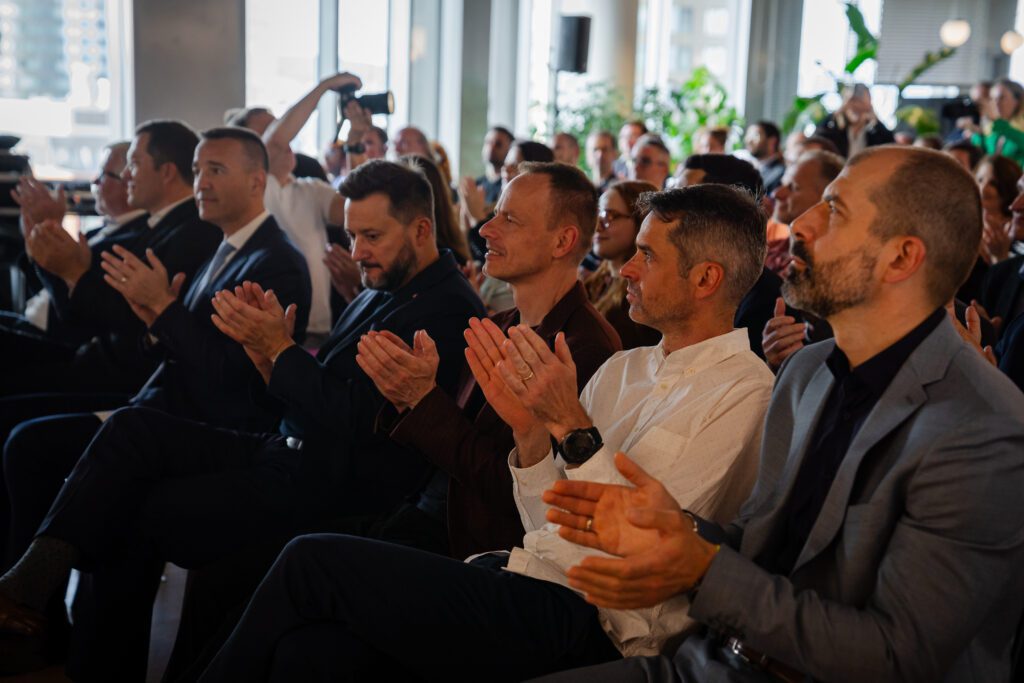
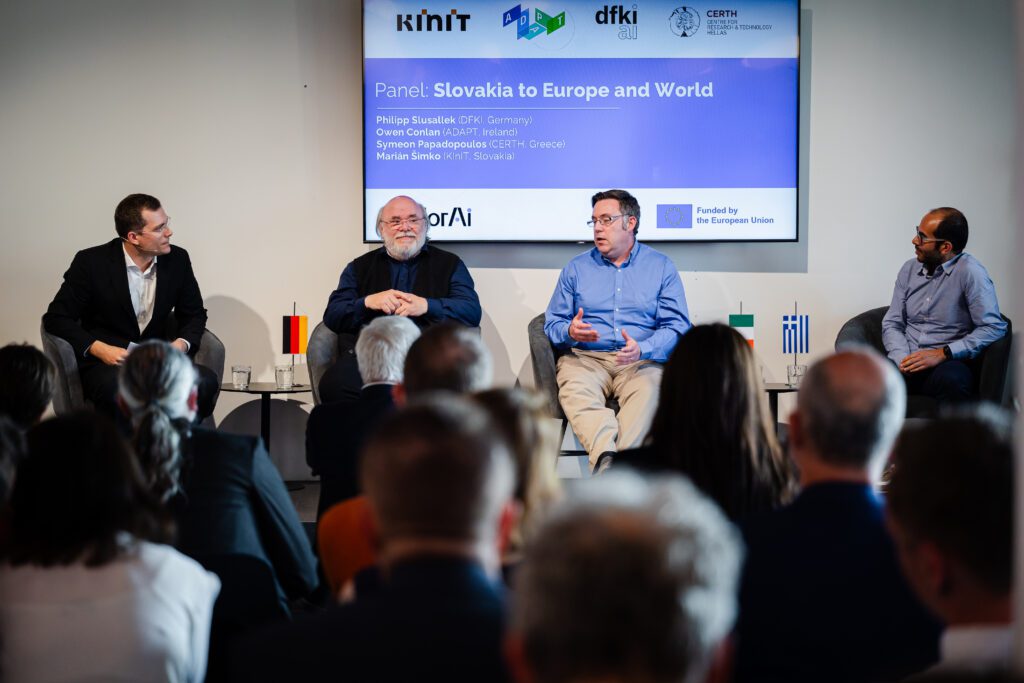
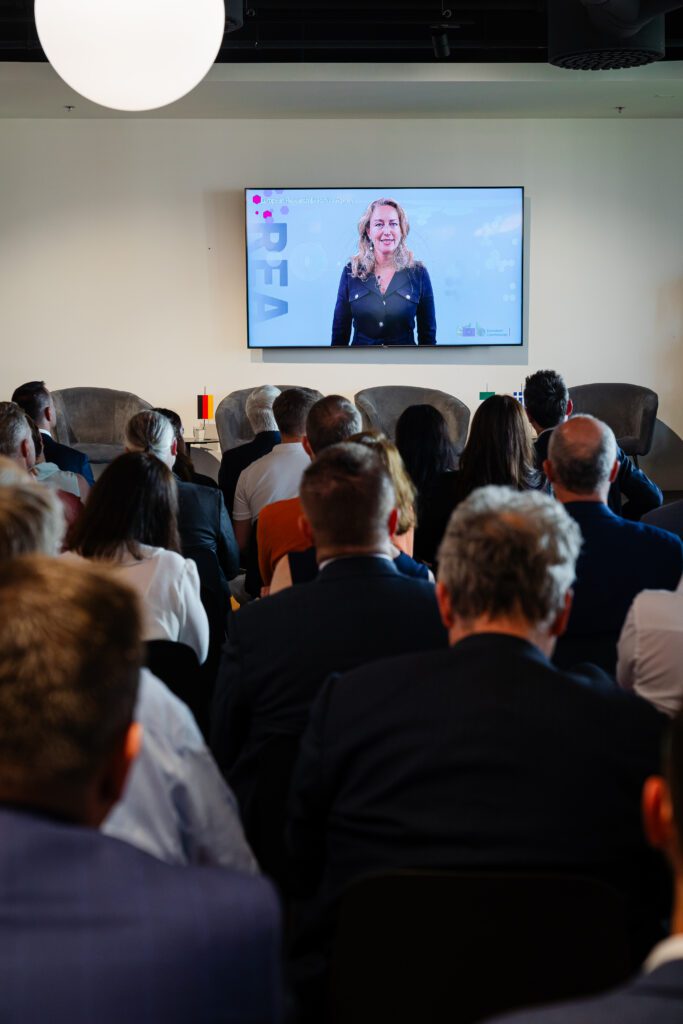
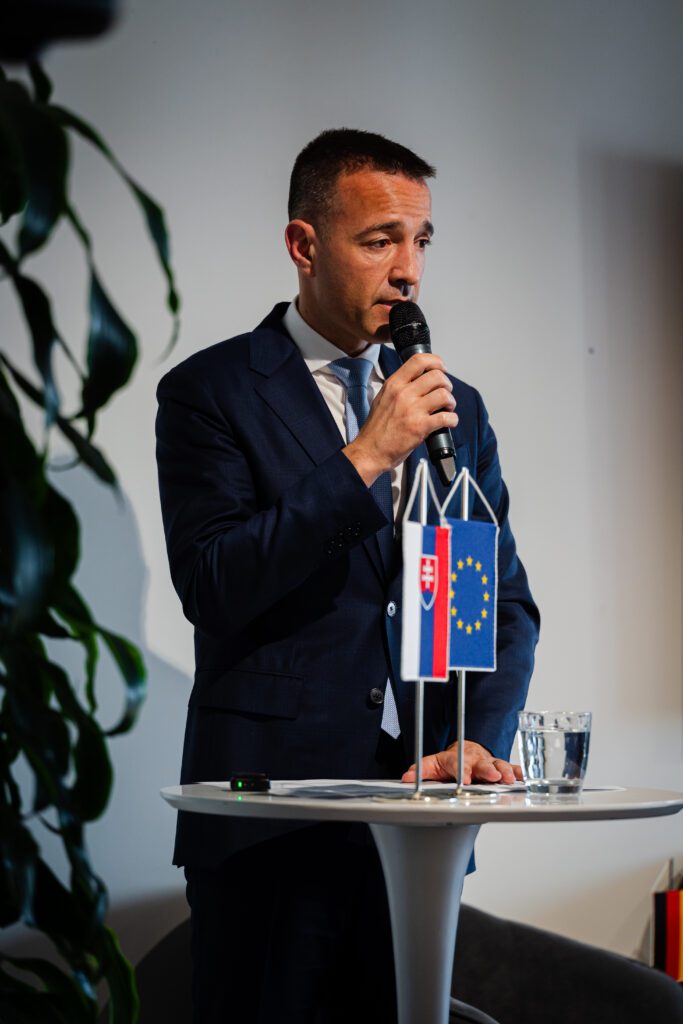
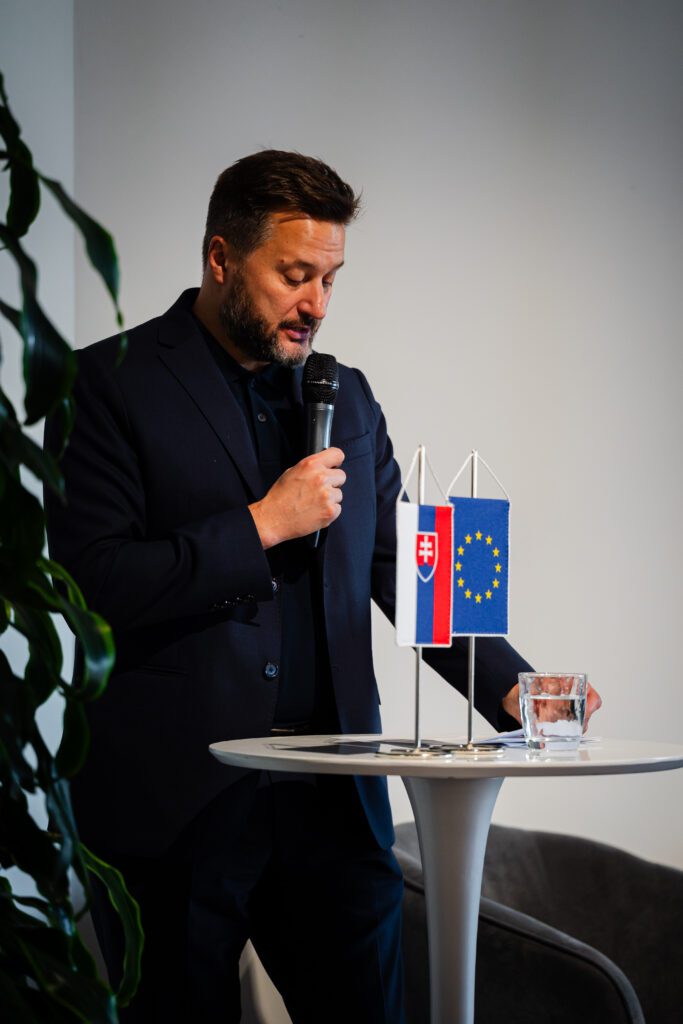
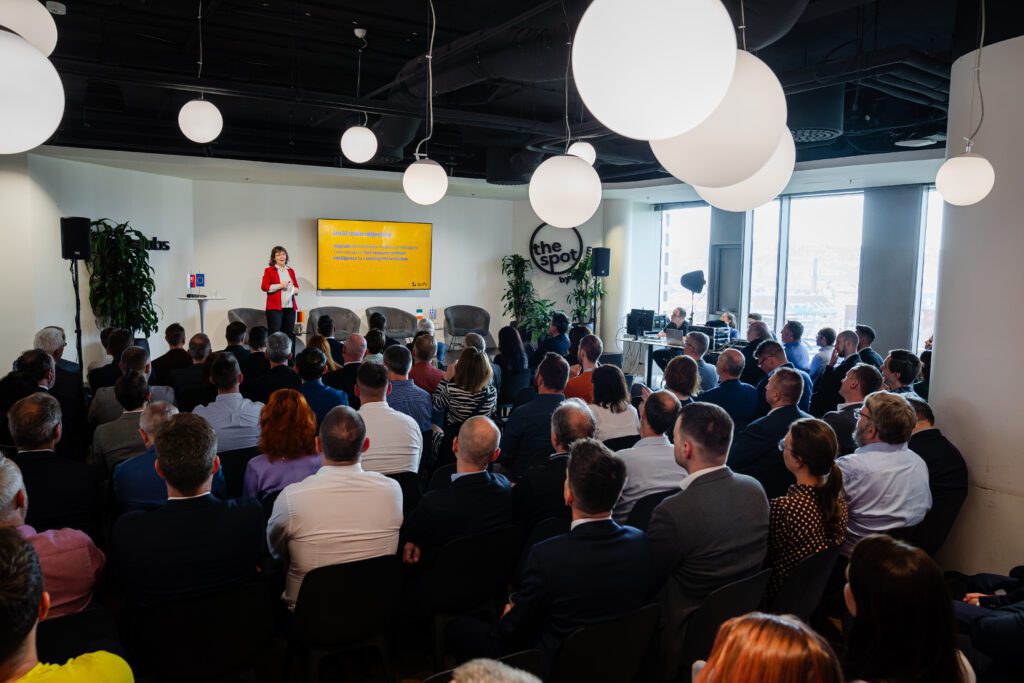
The project kicked off with a celebratory gathering on May 20, 2025, at the Spot coworking space, bringing together personalities from the academic, business, nonprofit, and public sectors. The atmosphere of trust and unity confirmed our shared goal: to build ethical, accessible, and human-centred AI.