AI po Slovensky
Does AI handle Slovak as well as it handles the major languages?
Almost every large language model now claims to cover Slovak, along with every other official language of the Union. How good that support actually is, however, remains an open question.
AI po slovensky is a one-day conference that sets out where we stand today: what has already been built, what is missing, and what needs to change. Its ambition is to bring together academia, industry, public institutions and the non-profit sector in a debate about what our priorities should be and how to reach them.
Programme
The programme offers something for each audience, along with room to share experience and to discuss current needs openly.
Participation in the event is by invitation only.
9:00 – 14:00
Morning session
Research teams and companies working with the Slovak language.
-
8:30
Registration of participants
-
9:00
Opening of the morning session
-
9:15
Round table of the academic NLP community
What Slovak research teams are working on now
-
10:30
Coffee break
Arrival of industry representatives
-
11:00
Natural language processing in industry
Cases from companies working with AI in Slovak
-
11:45
Ethics in NLP
Cases of digital humanism and trustworthy AI in practice
-
12:00
Poster session: part 1
Sharing experience between academia and industry
-
13:00
Lunch
14:00 – 18:00
Main programme
A broader circle of guests representing various parts of the ecosystem.
-
13:30
Registration for the main programme
-
14:00
AI in Slovak: Opening
-
14:10
Invited talk: Why smaller languages need coordinated effort?
The goals and current state of OpenEuroLLM project, and a vision for Europe’s smaller languages
Jan Hajič
-
15:00
The current state of Slovak language support in AI
What we have, what we’re working on, and what we need
Marián Šimko
-
15:30
Coffee break
-
16:00
Panel discussion: What is the price of language sovereignty?
Marián Šimko – KInIT
Jan Hajič – Charles University
Juraj Gazda – Technical University in Košice
Juraj Jánošík – ESET
Radoslav Štefánek – Government Plenipotentiary of the Slovak Republic -
17:00
Networking and poster session: part 2
-
18:00
Closing
Speakers
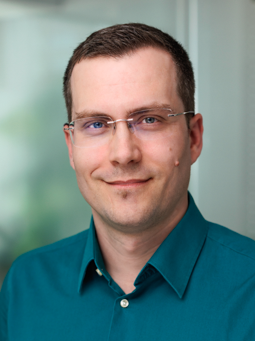 Marián Šimko
KInIT, Head of the NLP Team, Deputy Director
At KInIT, he leads the Natural Language Processing (NLP) research team, which contributed to the SlovakBERT model and the skLEP, SkMTEB and sk-bench benchmarks. He is committed to ensuring equal access to AI technologies for the Slovak language. He is the main coordinator of the Slovak NLP community and will guide the audience through the main programme.
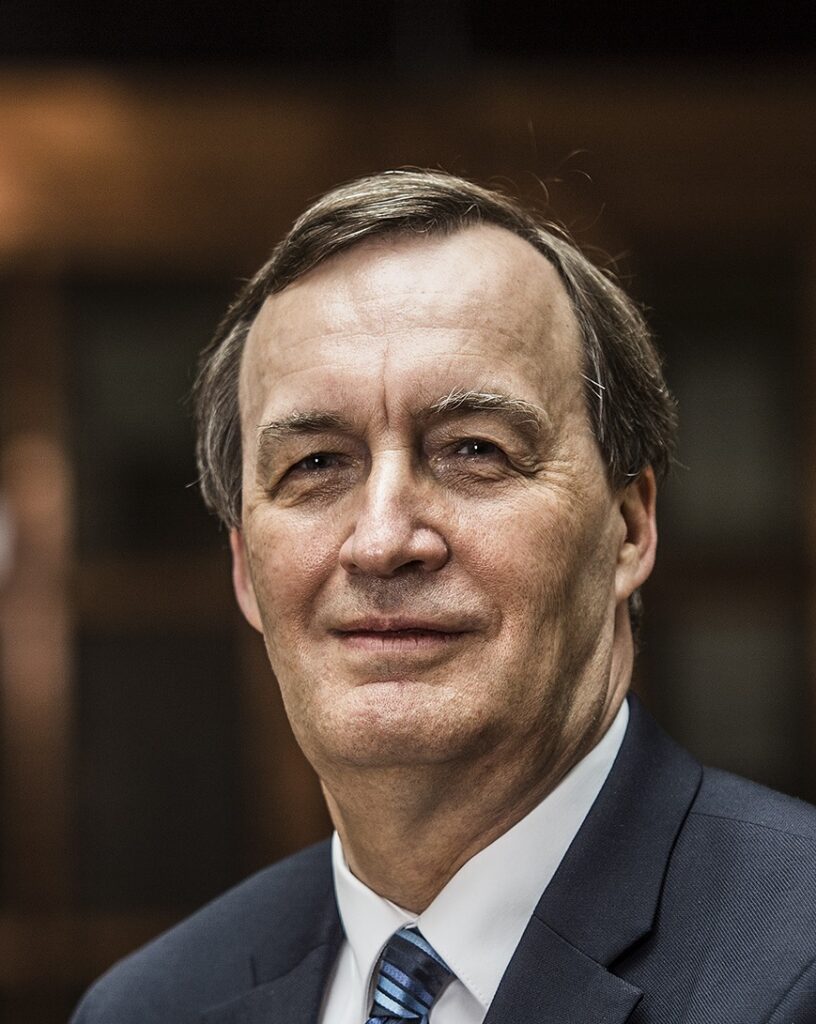 Jan Hajič
Charles UniversityProfessor of Computational Linguistics, Deputy Head of the Institute and Director of LINDAT/CLARIAH-CZ
He is a pioneer in the field in Central Europe, particularly in the application of machine learning methods and the associated creation of language data for natural language processing tasks. He leads the major research infrastructure LINDAT/CLARIAH-CZ and coordinates OpenEuroLLM, a European project developing open language models for all languages of Europe.
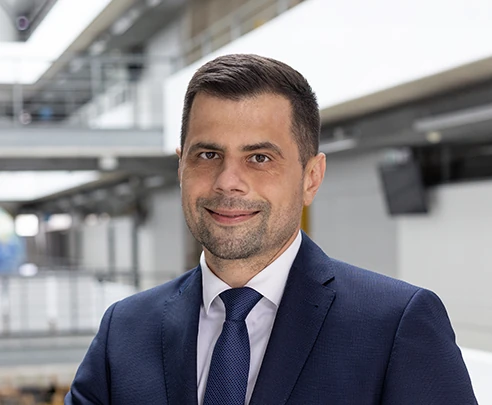 Juraj Gazda
TUKE, Vice-Rector for Innovation and Technology Transfer
Vice-Rector for Innovation and Technology Transfer. He is affiliated with the Department of Computers and Informatics at the Faculty of Electrical Engineering and Informatics, Technical University of Košice. His research focuses on artificial intelligence and robotics.
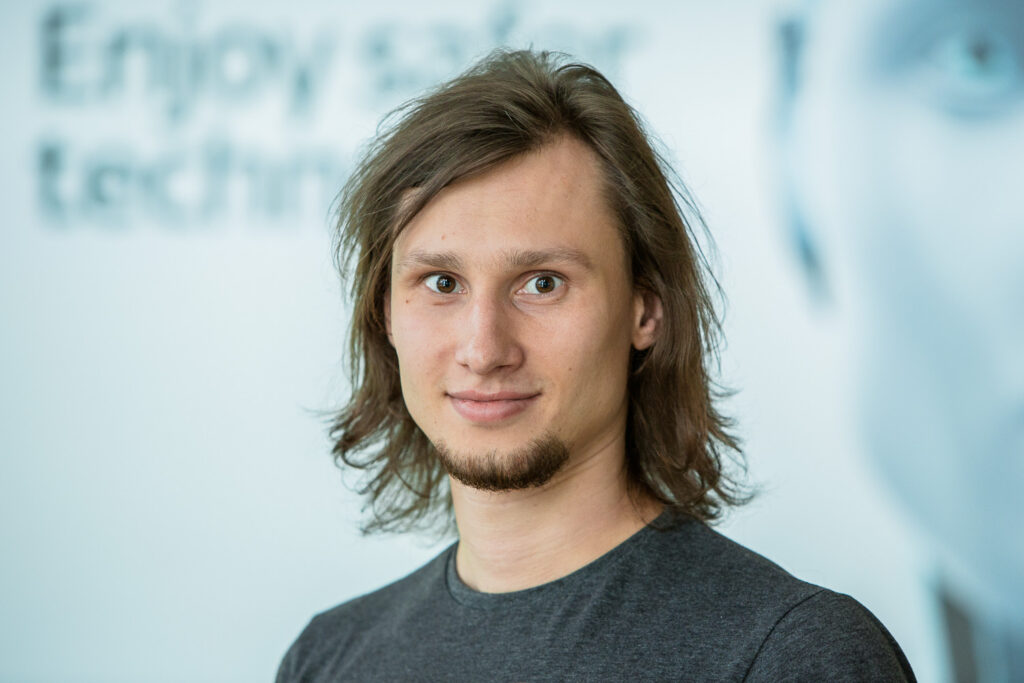 Juraj Jánošík
ESET, Vice President of Artificial Intelligence
At ESET, he leads the Automated Detection and Artificial Intelligence (AI) Programme. He is responsible for applied research and the implementation of AI and machine learning (ML) technologies in the company’s products and complex backend systems, including data lakes, telemetry systems, and the design of autonomous detection solutions.
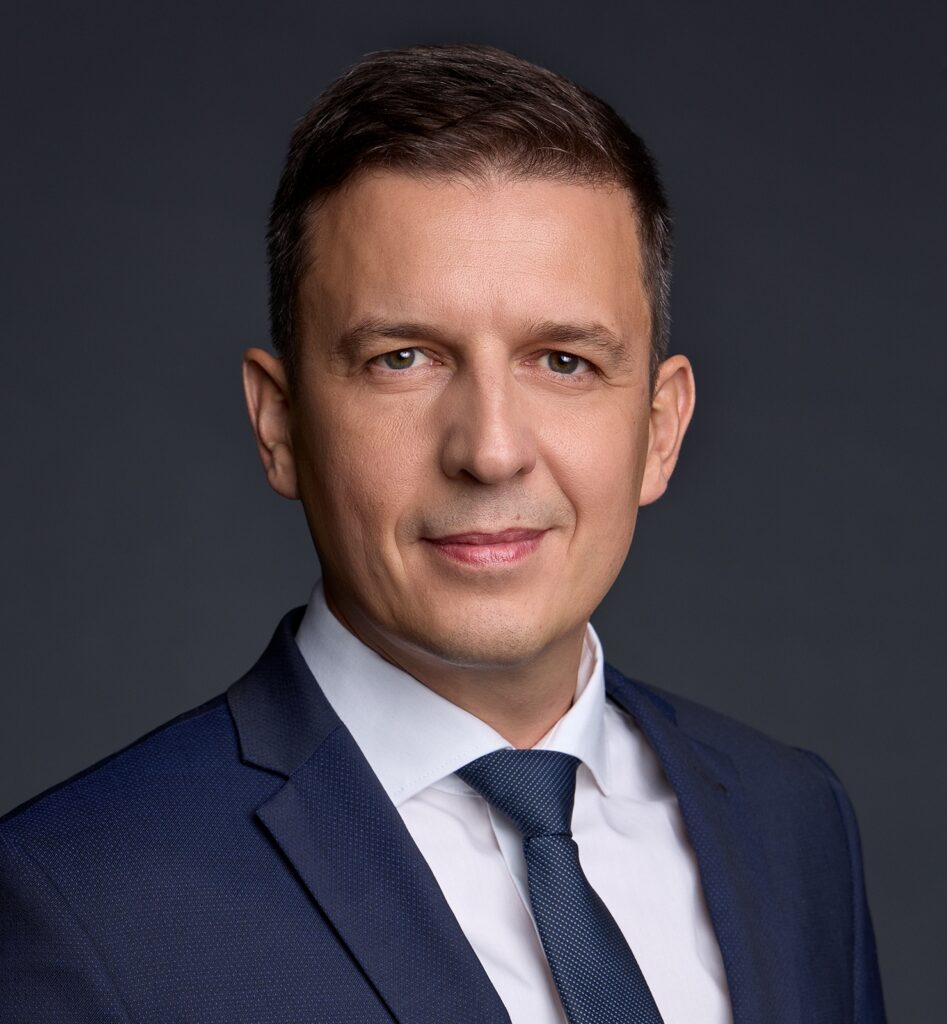 Radoslav Štefánek
Government Plenipotentiary of the Slovak Republic for Artificial Intelligence
Government Plenipotentiary of the Slovak Republic for Artificial Intelligence. He coordinates the national AI policy and represents Slovakia on the European Artificial Intelligence Board. He fosters collaboration between public administration, businesses, research institutions and international partners.
Poster sessions
Research
- Projects of the Department of the Speech Analysis Synthesis of Institute of informatics SAS, R. Sabo
- Web & User Data Processing @ KInIT: Ongoing research, J. Šimko, D. Macko, R. Móro, I. Srba, M. Hyben, J. Čegiň, B. Pecher, R. Belanec
- Slovník slovenských pojmov, M. Blšták
- Agentic Corpus Debugging, M. Šuppa, I. Vykopal, J. Kopčan
- Multimodal Analysis of Social Media – Where We Have Ended Up, K. Machová, V. Balara
- Aranea: Dataset (nielen) pre AI, V. Benko
Industry & Applications
- Practical applications of the Department of the Speech Analysis Synthesis of Institute of informatics SAS, R. Sabo
- SkMTEB: Slovak Massive Text Embedding Benchmark and Model Adaptation? M. Šuppa, A. Ridzik, D. Hládek, N. Kňažeková, V. Ondrejová
- sk-bench: A Native-First Benchmark for Evaluating Large Language Models in Slovak, M. Šuppa, I. Vykopal, A. Ridzik, K. Sopkovič, J. Kopčan, D. Hládek, et al.
- SLAIH: Slovak Language AI Hub, M. Šimko, A. Ridzik, N. Kňažeková, M. Šuppa, et al.
- Audio: Beyond Simple Fine-Tuning, S. Dulíková, V. Gregor, Ľ. Kriš, M. Veselý
- Adapting Open ASR Models for improved Slovak Speech Recognition, R. Matúš, M. Tamajka
- Specification Agent: Human-in-the-Loop AI for Software Issue Specification, A. Brecko, V. Kostan, L. Kris, M. Tamajka, M. Cambal, K. Lacko, T. Vician, K. Ohradzanska
- From Legal document classification to Receivables lifecycle modeling, S. Dulíková, M. Veselý, K. Burda, M. Tamajka, Ľ. Kriš, O. Gutten, L. Trajčíková, J. Štít
- How Well Can Tools Anonymize Slovak Text? A Benchmark of NER and Anonymization Tools, M. Veselý, S. Dulíková, M. Blšták, A. Ridzík, V. Gregor, M. Šimko
- Building Trustworthy AI Through Participatory Ethics-Based Assessment, J. Podroužek, K. Marcinčinová, N. Slosiarová, J. Štít, O. Gutten
PhD Students
- Deep Learning Methods for Multi-Agent Systems, M. Stromko
- What Do People Consider an Error? Annotating Error Spans in Translations, M. Chotár, D. Munková
- Evaluating document-level translation quality with large language models: Consistency, prompt design, and agreement with automatic metrics on English-Slovak translations, M. Kleštinec, D. Munková
- Sentiment Analysis in a Low-Resource Financial Domain: A Comparative Study of Machine Learning and Language Models for Slovak Language, T. Hladká, M. Munk
- BOTAS: Bayesian Optimization for Zero-Shot Source Task Selection in Merging of LLMs, R. Belanec, I. Srba, M. Bielikova
- Assessing Web Search Credibility and Response Groundedness in Chat Assistants, I. Vykopal, M. Pikuliak, S. Ostermann, M. Šimko
- Včasná detekcia Alzheimerovej choroby pomocou siamských conformer sietí v slovenských úlohách konfrontačného pomenovávania, T. Černáček, M. Rusko
Companies working with AI in Slovak
Ableneo, Deutsche Telekom IT Solutions Slovakia, dNation, nanlab, O2 Slovakia, PosAm, Slovak Telekom, Slovakia Online, SmarTech Solutions, Tatra banka